The Ergonomic Student Workstation: Why It Matters and How to Build One on a Budget

An ergonomic workstation is a study space that supports your body properly. It covers your desk, chair, screen height, keyboard and lighting. The aim is simple. You want your feet flat on the floor, your wrists straight, and your screen at eye level.
Many students study on a bed or sofa. This might feel comfortable at first. However, it often leads to poor posture over time. An ergonomic workstation solves this by keeping your body aligned while you work.
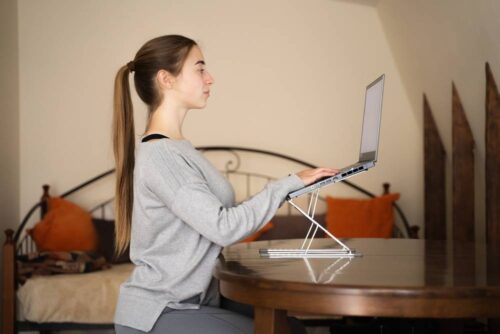
Why an ergonomic workstation matters for students
Long study sessions add up fast. Revision, assignments and online lectures can mean hours at a desk each day. Without an ergonomic workstation, this often causes neck strain, back pain and tired eyes.
These aches make it harder to concentrate. As a result, your study sessions become less productive. Building good habits now also helps later. Posture problems that start at university often continue into office jobs after graduation.
At Homes for Students, every bedroom includes a sturdy desk. This gives you a strong starting point for your own ergonomic workstation, before you spend a penny on extras.
How to build an ergonomic workstation on a budget
You don’t need expensive furniture to fix your setup. A few small changes make a big difference. Here’s how to create an ergonomic workstation without spending much.
Raise your screen to eye level.
Laptop screens usually sit too low. This forces your neck to bend forward for hours. Stack some books, a shoebox or a ream of paper under your laptop. Keep raising it until the top of the screen matches your eye level. This one change instantly improves your ergonomic workstation.
Add an external keyboard and mouse.
Once your laptop is raised, typing on it becomes awkward. A basic keyboard and mouse fix this. You can often find both second-hand or from a budget retailer. This lets your wrists stay flat instead of bending upward.
Support your lower back.
Most chairs leave a gap behind your lower back. A rolled towel or spare cushion fills this space. It takes pressure off your spine and costs nothing extra.
Keep your feet flat
If your feet don’t reach the floor, use a stack of books or a sturdy box as a footrest. This small fix keeps your knees level with your hips.
Use natural light where you can
Position your desk near the window if possible. Add a cheap desk lamp for evening study too. This reduces eye strain from staring at a dimly lit screen.
Take regular breaks
Even a well-set-up ergonomic workstation can’t replace movement. Stand up, stretch and look away from the screen every hour. This simple habit reduces both eye strain and muscle tension.
Start your ergonomic workstation today.
Building an ergonomic workstation doesn’t need to cost much. Most of these changes use items you already own, plus maybe one or two second-hand buys. The result is a study space that supports longer, more comfortable focus, right from the desk in your Homes for Students room.
